My teaching aims to prepare students to become confident, capable, and responsible engineers. I connect theoretical foundations with realistic engineering problems, practical applications, and project-based learning. Students are encouraged to take ownership of their education, acquire new knowledge independently, and critically evaluate their assumptions and results. Through varied teaching and assessment methods, I help students develop the technical, analytical, and communication skills required to address complex engineering challenges. My teaching covers the following fields:
Systems Engineering Fundamentals
System Architectures and System Modelling
System Integration and Verification
Digital Engineering and Digital Twins
I teach systems engineering as a lifecycle discipline. Model-Based Systems Engineering is not limited to requirements and architecture development on the left side of the V-model. It also supports implementation, integration, verification, validation, operation, and the continued refinement of a system. My goal is it to teach students how to develop system architectures, define and manage interfaces, plan integration and testing activities, and update system models as new evidence becomes available or to enable autonomous behavior.
Applying systems engineering throughout the lifecycle: Students apply systems engineering principles to realistic problems that extend from early system definition to implementation and operation. They learn how architecture, integration, testing, and operational considerations inform one another throughout the lifecycle.
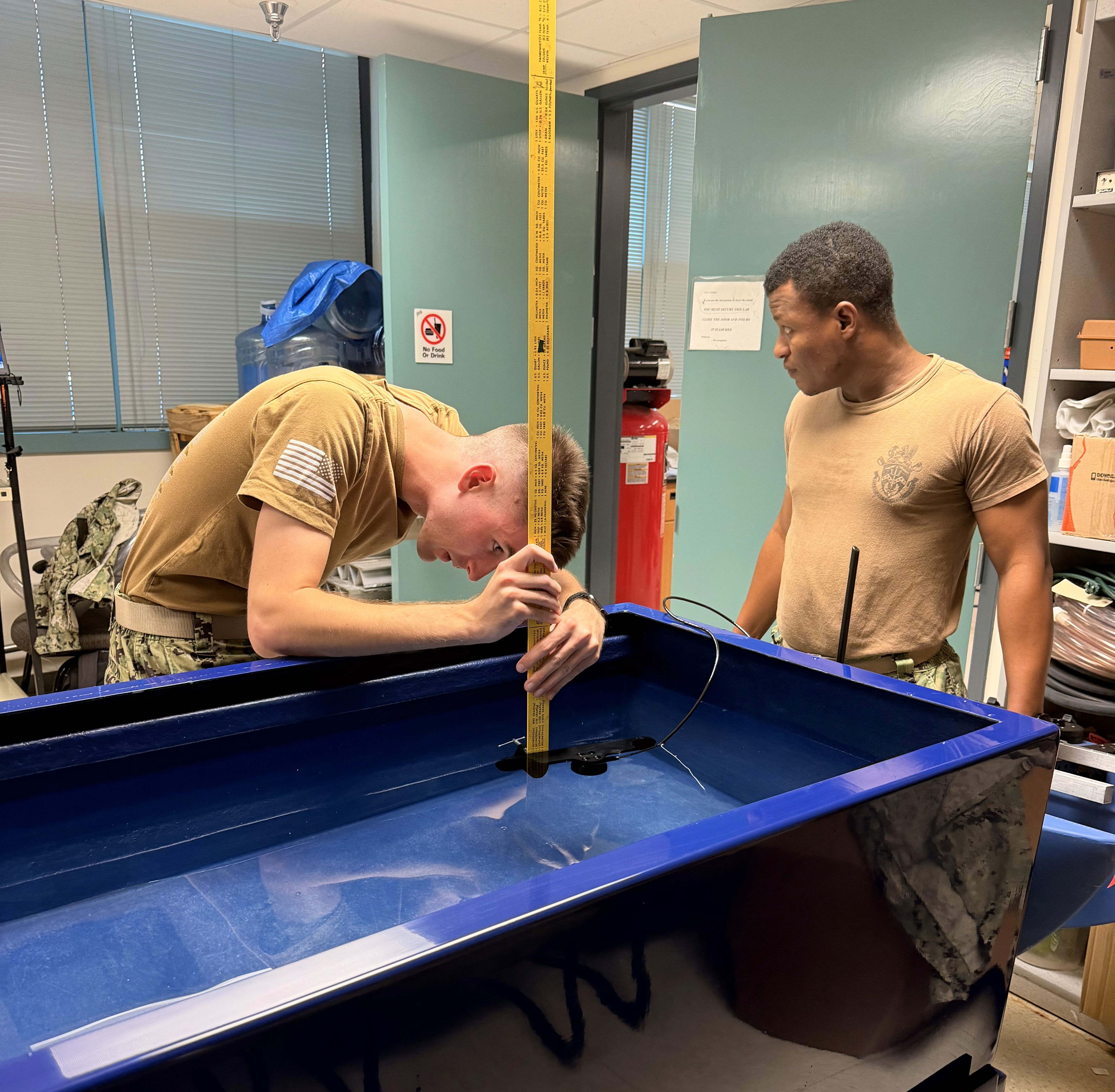
Learning through authentic engineering projects: Most of my courses include a project in which students apply theoretical concepts to real systems. For example, students in Systems Integration have developed approaches for integrating sensors into unmanned surface vessels. They progressed from analyzing the existing system architecture and defining interfaces to physical assembly, operational test planning, sensor qualification, and refinement of the architecture based on the results.
Developing engineering judgment: Complex engineering problems rarely have a single correct solution. I encourage students to acquire new information independently, evaluate assumptions, compare alternative approaches, and justify their decisions using technical evidence. My role is to provide structure, guidance, and feedback while allowing students to take ownership of their work.
Combining assessment with continuous feedback: I use a portfolio of assessment methods aligned with the learning objectives of each course. These methods include projects, oral examinations, written work, presentations, and individual or team assignments. Oral midterm examinations allow students to demonstrate their conceptual understanding and reasoning while receiving direct feedback on their preparation for the final assessment. During course projects, students communicate their progress and receive feedback through Interim Progress Reviews and Final Project Reviews.
Integrating emerging methods and technologies: I continuously update my courses to reflect developments in engineering practice, including SysML v2 and the responsible use of artificial intelligence. Students learn how to evaluate the capabilities and limitations of new technologies and apply them effectively while continuing to meet the course learning objectives. AI serves as a tool for learning and engineering work, but not as a substitute for technical understanding, critical evaluation, or professional judgment.
An open and accessible learning environment supports all of these activities. Students are encouraged to raise questions, discuss challenges, and seek feedback throughout the course. Through an open-office approach and regular interaction during projects, I aim to identify difficulties early and help students make steady progress while maintaining responsibility for their own learning. I have been teaching for many years in different languages, as well as courses with over 150 students and smaller courses with less than 10 students.

I encourage students to take ownership of their research while providing the structure, methodological guidance, and regular feedback they need to succeed. Together, we develop a meaningful and manageable research question, select an appropriate methodology, and critically evaluate the resulting evidence. My goal is to help students produce rigorous work while developing the independence, confidence, and communication skills needed for their future careers.
My approach to effective thesis advising is built around three core principles:
Continuous Feedback: Students meet with me regularly to present their progress, discuss intermediate results, and identify potential adjustments to their research approach. These meetings provide structure while ensuring that students retain ownership of their work.
Meaningful Research: Students learn to apply fundamental principles of scientific inquiry, including a thorough review of the state of the art, the development of an appropriate methodology, and the systematic verification of their findings. Thesis topics should address relevant questions and make a clearly defined contribution.
Defensible Outcomes: Research conclusions must be supported by credible evidence and systematically gathered results. Students learn to design and document their investigations so that their findings are reliable, repeatable, consistent, and defensible.
With over 40 advised students this approach proved to be very successful and constantly gets positive feedback from students. Through this process, students are prepared not only to complete their studies successfully, but also to address complex research and engineering problems in industry, government, or academia.

Thesis Advertisement
Dissertation and Master Thesis Students
Are you a student and interested in a research topic for your thesis or dissertation? Please check out my research and publications first. Contact me if you have an interesting idea for a topic that aligns with my field or if you are interested in current thesis topics.
I have been teaching multiple courses in the field of Systems Engineering and Engineering Design. With Systems Integration being a good representation of the overall necessity for a thorough systems engineering approach. Here is an overview of courses I have been teaching:
Systems Integration
System design does not end on the left side of the V-model. Implementation, integration, verification and validation, and testing provide essential evidence that informs necessary design iterations. I teach students that system development is not a linear process. Instead, engineers must repeatedly evaluate and refine a system to ensure that it performs as intended in its operational environment.
In my Systems Integration courses, students learn different integration strategies, interface theory, and methods for bringing components and subsystems together into a coherent system. They apply these concepts by developing system architectures and defining the interfaces among internal subsystems and external systems. This includes the use of interface diagrams, interface control document (ICD) tables, and other model-based representations that support collaboration and technical decision-making. Students learn how to use SysMLv2 for this and learn the connection and reuse capabilities.
Students are also introduced to tools such as Git, which allow them to analyze changes, coordinate parallel engineering activities, and make defensible decisions when merging simultaneous development efforts. These experiences demonstrate that system integration is not only a technical activity, but also a collaborative process that requires configuration management, clear communication, and careful control of interfaces.
A central objective of integration is to demonstrate that a component or subsystem is qualified for its intended application. Students therefore develop an Operational Test Plan (OTP) that defines how the integrated system will be evaluated and how the resulting evidence will support engineering decisions. Throughout the course, they apply these methods to a practical project, such as the integration of sensors into an Unmanned Surface Vessel (USV), as shown in the photograph below.
This course design helps students understand the iterative nature of systems integration, the importance of carefully planned testing, and the differences between testing under controlled laboratory conditions and evaluating a system in a realistic operational environment. By progressing from architecture and interface definition through integration, testing, and qualification, students experience how evidence from later lifecycle activities can reveal necessary changes to the system architecture.